

Essential Compliance: Blast Monitoring & Safety for SA Quarry and Civil Projects
For any project involving explosives—from high-volume quarry blasting to complex civil construction blasting—the commitment to safety and regulatory compliance is paramount. In South Australia, the rules governing ground vibration and air blast are strict, and adherence is enforced through rigorous monitoring.
Blast monitoring & compliance is not an optional extra; it is the verifiable proof that a blasting operation has been executed with the required level of control. A Plus Blast Management, a South Australian, family-owned firm with 30+ years of director-level experience, integrates comprehensive monitoring into every project, ensuring our clients receive maximum regulatory assurance.
Beyond the Blast: The Mandate for Measurement
A controlled blast aims to fragment rock efficiently while ensuring collateral effects do not impact surrounding infrastructure or environment. The only way to prove this control has been achieved is through objective, third-party data collection.
Why Ground Vibration and Air Blast Matter
Regulators and surrounding communities focus on two key measurable outcomes of a blast:
- Ground Vibration (PPV – Peak Particle Velocity): The speed at which ground particles move due to the blast energy. Excessive vibration can cause damage to structures, which is why strict limits (often 5 mm/s or less) are enforced, especially in urban or residential areas.
- Air Blast (Overpressure): The pressure wave transmitted through the air. While rarely damaging structure, high air blast can be a source of community annoyance and is therefore also strictly regulated.
The primary purpose of professional precision blasting is to keep these metrics well within the mandated limits through expert design, drilling, and timing.
The Role of the Blasting Contractor in Compliance
A responsible SA blasting contractor treats compliance as an inherent part of their service delivery, not a separate function.
Integrated Monitoring as a Non-Negotiable Service
A Plus Blast Management performs blast monitoring & compliance in-house. This ensures that the crew responsible for the blast execution is directly accountable for the monitoring results.
This integration covers the full cycle:
- Design Phase: Incorporating the monitoring requirements and limits into the initial blast plan.
- Execution Phase: Ensuring the drilling and loading adhere perfectly to the design to control PPV.
- Verification Phase: Using calibrated equipment to record and report the blast metrics.
This seamless, integrated approach is only possible because all services, including drilling and blasting South Australia, are managed by our internal team of 12+ licensed professionals.
The Technical Process: How Data is Collected
The process relies on precision technology and expertise:
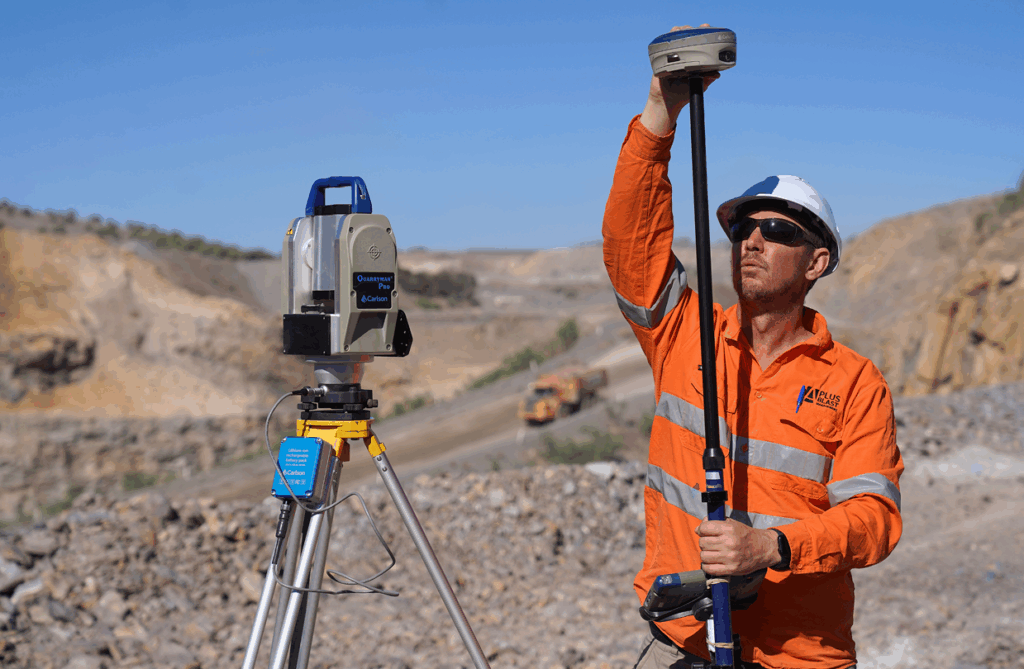
- Seismograph Placement: Calibrated seismographs are strategically placed at the closest sensitive structures (residences, utilities, infrastructure). The placement is determined during the initial consulting & advisory phase.
- Recording: The devices are programmed to automatically trigger and record the ground vibration and air blast (overpressure) during the detonation sequence.
- Data Analysis and Reporting: The recorded data is downloaded, analysed by qualified personnel, and compiled into a formal compliance report. This report clearly states the measured PPV and air blast levels against the statutory limits.
This data is the definitive proof that the controlled blasting operation adhered to all safety and legal parameters.
Strategic Compliance: Protecting Your Project and Reputation
Beyond meeting the basic legal requirements, rigorous blast monitoring offers strategic benefits for project owners and developers.
Regulatory Assurance and Community Relations
Having detailed, compliant monitoring records protects the client from potential legal challenges or complaints.
- Streamlined Approvals: A history of compliance facilitates smoother approval processes for future blasts on site or subsequent projects in the region.
- Community Trust: Transparent reporting builds trust with local communities and stakeholders, especially crucial for long-term projects like quarries or large construction developments.
Continuous Improvement Through Data
The monitoring data is invaluable for continuous improvement. If a blast is slightly off the target fragmentation, the vibration data can be cross-referenced with the geological data to refine the explosive charge weights or delay sequence for the next blast. This data-driven refinement ensures clients consistently receive optimal rock-on-ground services. By entrusting their project to a firm that handles everything from explosives supply SA to detailed compliance reporting, clients partner with a contractor focused on project security and safety, anchored by 30+ years of local expertise.